
Click to watch my recent interviews on AI, Social Media and Conspiracy Theories
Critical Thinking about AI (29 minutes)
Now that AI is everywhere, it poses some new challenges and requires even more diligence to get to the bottom of an issue. It's especially challenging in schools for teachers/coaches to guide their students in how to evaluate the information they get from AI. Four guidelines are discussed.
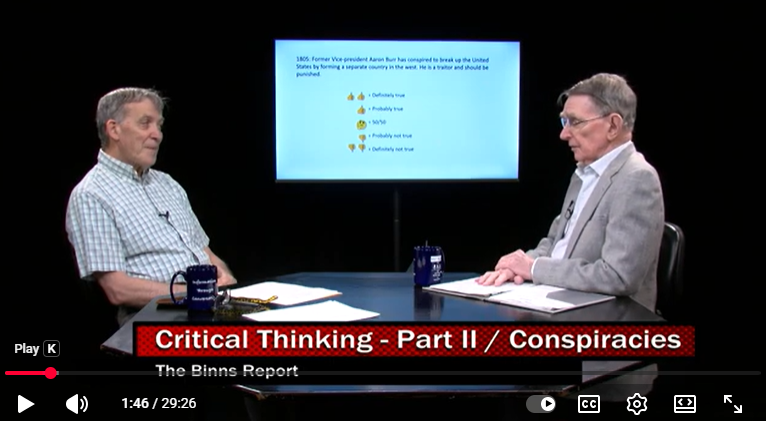
Teaching Conspiracy Theories (29 minutes)
How do we evaluate the conspiracy theories we hear? Conspiracies in history offer examples to develop the critical thinking skills needed for better evaluation. A 3-step process is explained.

Evaluating Social Media (29 minutes)
In this interview, Kevin explains critical thinking skills for evaluating social media as a source of information. The focus is not limited to HS students but is necessary for all of us trying to get the straight skinny on the deluge of "information" that floods the internet & traditional media.
How-To Teach Critical Thinking Skills (Demos)
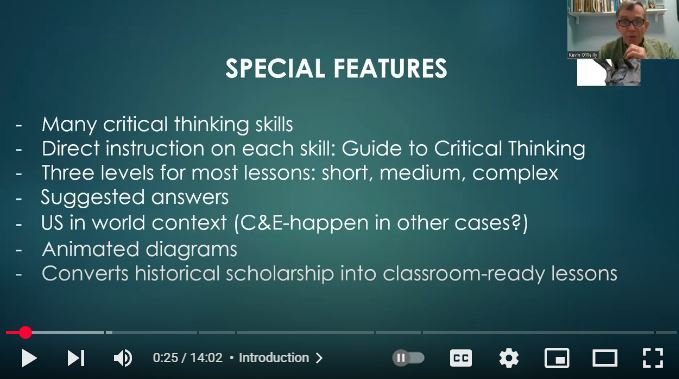
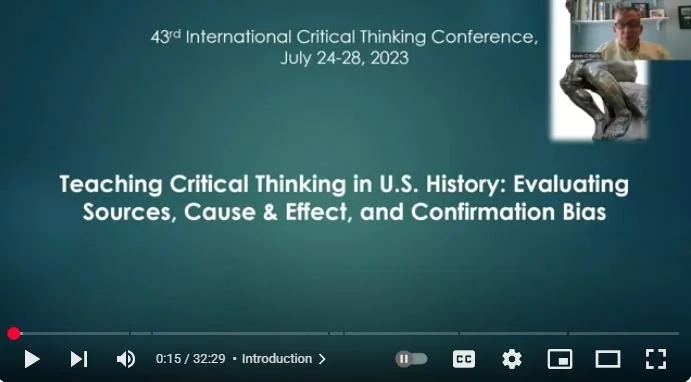
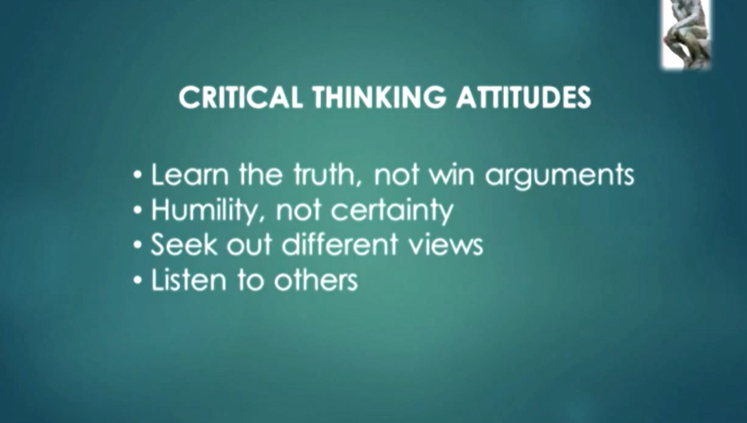
Special Features of Critical Thinking Curriculum (14 mins)
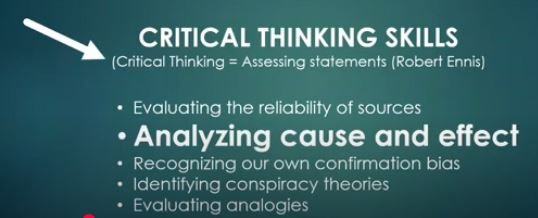
Critical thinking skills taught: evaluating sources, analyzing cause+effect, recognizing confirmation bias, evaluating analogies, evaluating conspiracy theories
3 possible levels for each lesson: short, medium, complex
Answer keys, diagrams
Student-digestible summaries of historical scholars
US in global context
“Debate This!”: Applied Critical Thinking
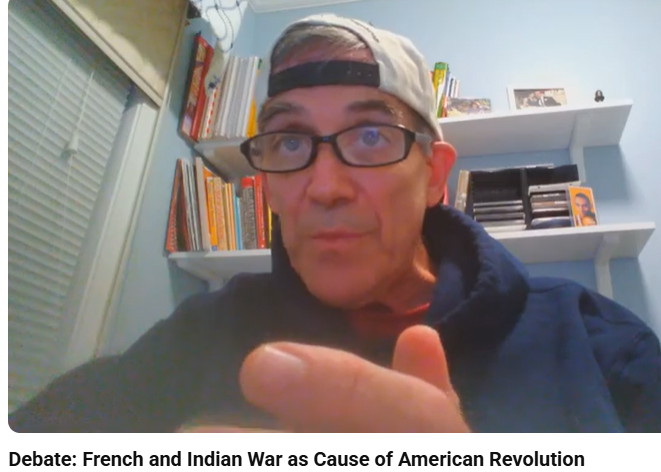
Debate: French and Indian War as Cause of the American Revolution (4 mins)
Kevin demonstrates evaluating cause-and-effect arguments
Responding to Climate Change Deniers
Kevin opens with a discussion of how we should critically evaluate evidence
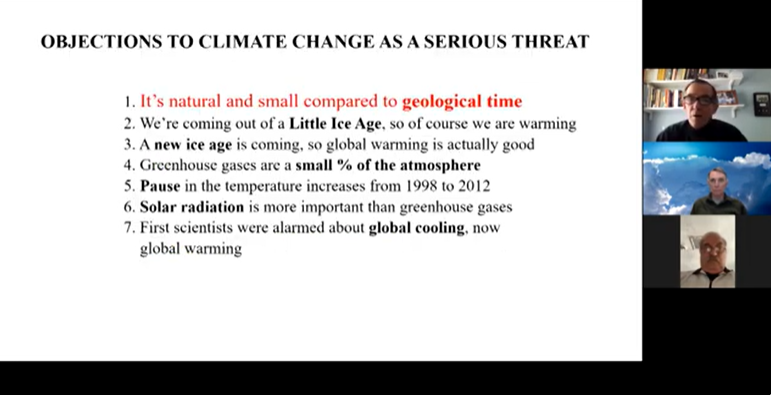
Kevin responds to common objections to anthropogenic climate change
HOW TO TEACH: Evaluating Sources, Cause + Effect, and Confirmation Bias (32 mins)
Using PROP and more to teach students to assess historical and online sources?
Battle of Saratoga and Turner thesis as test cases for cause-and-effect evaluation
Using surveys on emotionally-charged topics like Christopher Columbus to help students identify their confirmation biases
Applying these skills from the study of history to internalized decision-making skills for everyday life
HOW TO TEACH: Cause + Effect (4 MINUTES)
Analyzing the connection between C+E
Correlation v. causation
Example: which historian makes the best causal argument between the Battle of Saratoga and Americans winning the Revolutionary War?
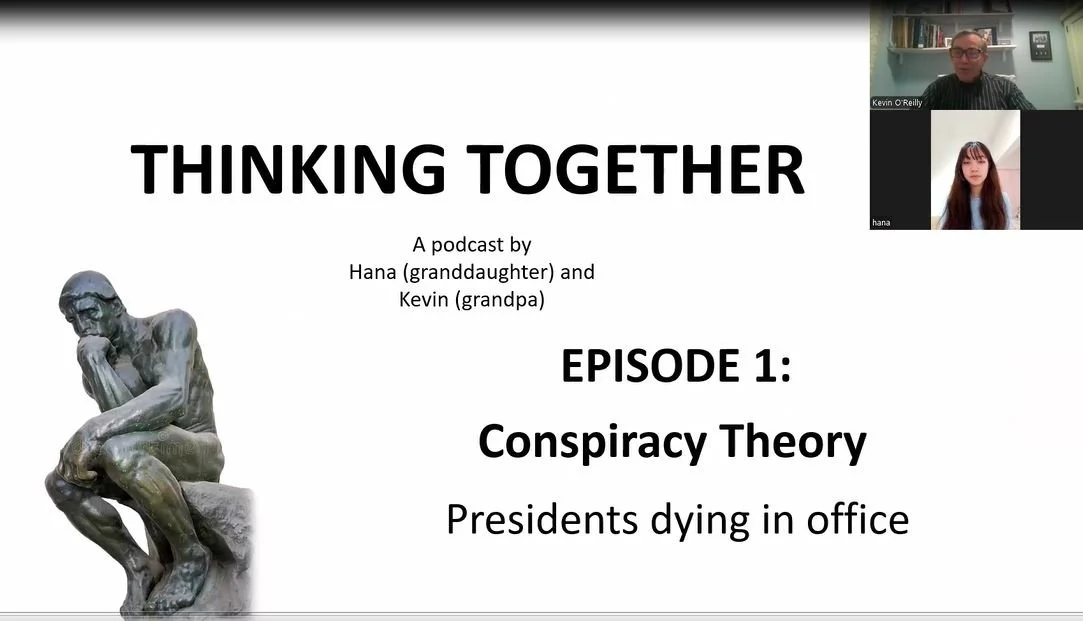
HOW TO TEACH: Conspiracy Theories (9 mins)
Demo of my using the Conspiracy Detection Kit to help my granddaughter evaluate the Curse of Tecumseh conspiracy theory of presidents’ deaths
What does it mean to teach ‘critical thinking’? (5 mins)
Excerpts from my full interview (see next) on teaching critical thinking in the social studies classroom
Full interview: Teaching critical thinking (28 mins)
“I always wanted to protect the minority point of view in class, so that people would hear those different points of view. So as a teacher, I was always working with my confirmation bias. Like, I don’t agree with this, but I need to protect this student, in the sense that people should be able to explore these ideas.”